Project period: 2023–2024 · Public campaign launch: Spring 2024
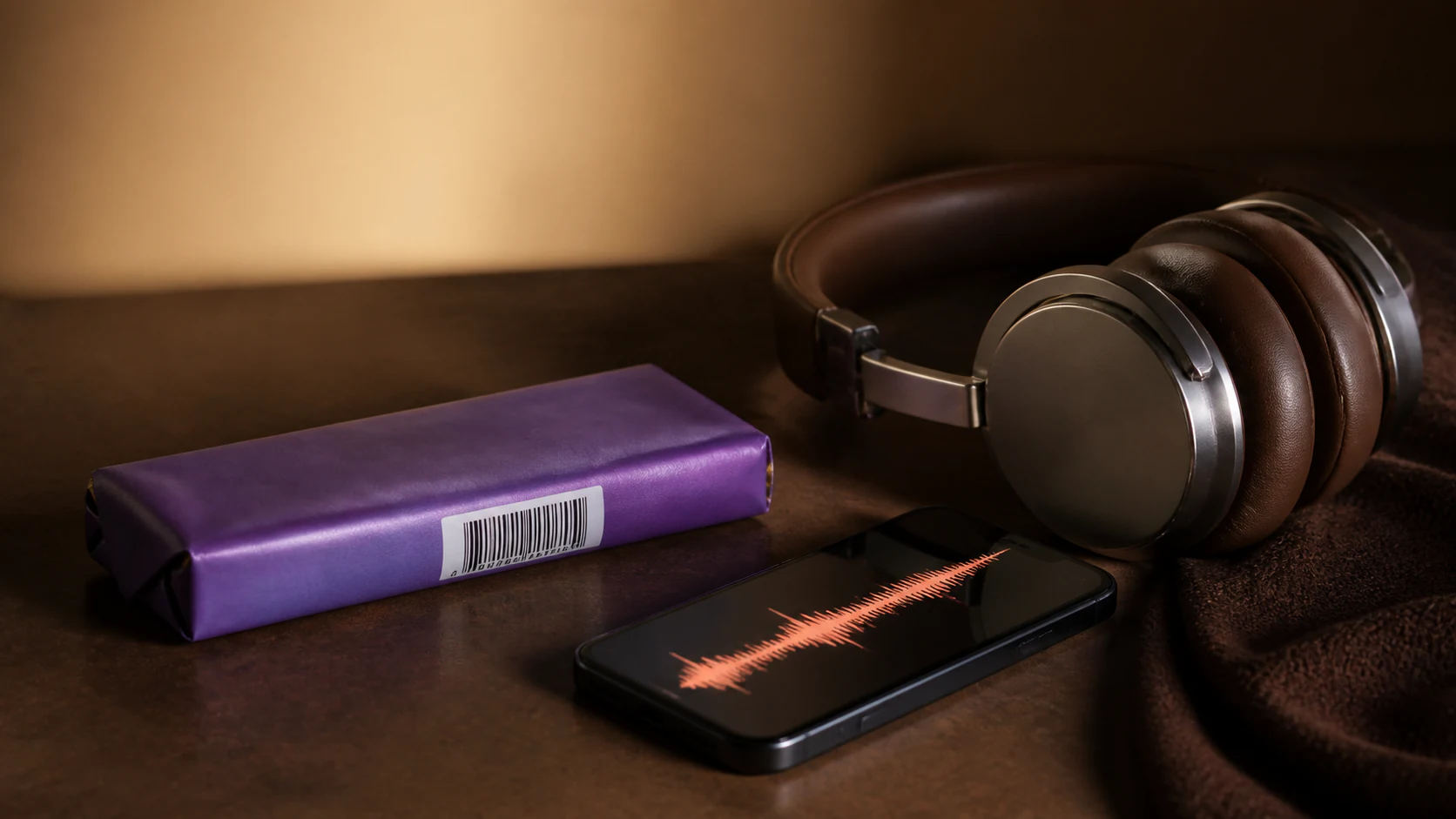
The first thing people saw was a purple bus stop shaped like a giant pair of headphones.
The more interesting product was invisible.
In spring 2024, the public Milka feat.AI campaign invited people to buy a participating product, register its barcode, create a personal song and send it to someone they cared about. The campaign ran across Kazakhstan, Uzbekistan, Azerbaijan and Mongolia, with prize mechanics around the generated tracks.
The campaign team arrived with the core idea. I was responsible for turning that idea into a working AI-music product.
My role
- Product architecture — translated the campaign mechanic into an end-to-end user and system flow
- AI-music pipeline — designed the multilingual lyrics, prompting, translation and music-generation workflow
- Software development — led development and technical integrations
- QA and launch — coordinated native-speaker testing, automated the approved language routes and took the product through launch
The important lesson was not that an AI model could make music. By then, that was already possible. The hard part was building the software around the model: a flow that started with a person and ended with a song another person could actually receive.
The campaign made AI understandable
“Generate a song with AI” is abstract. Milka feat.AI made it concrete: create something personal for another person. The chocolate was the entry point, the barcode opened the campaign, a short brief directed the software and sharing completed the experience.
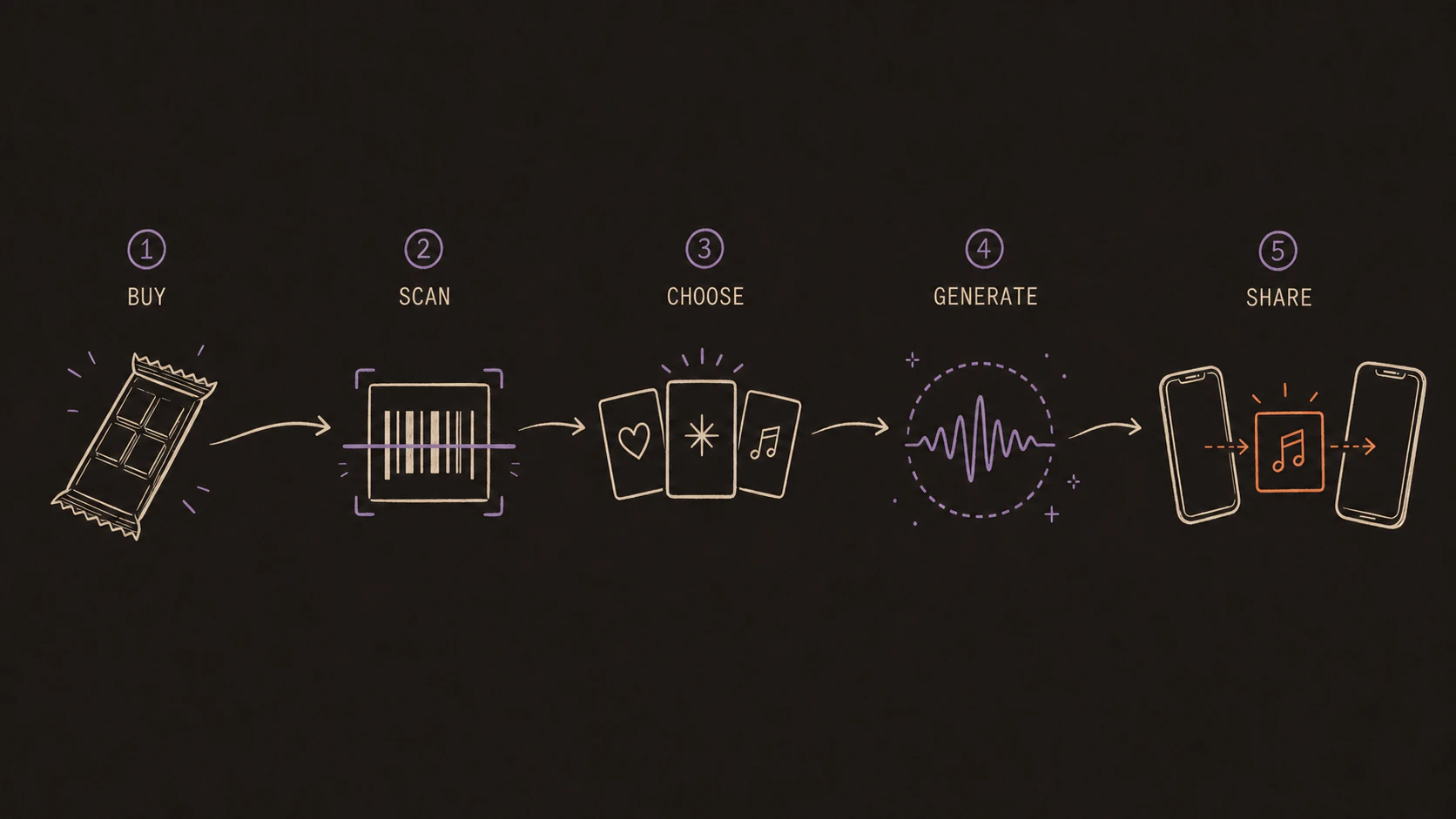
People did not need to understand prompts or models. They only needed to understand the gift they wanted to make. The AI disappeared behind that action.
A generation is not yet a product
A model demo only has to produce an impressive result. A campaign product also has to:
- accept and validate understandable input
- manage generation, delay and failure
- deliver the result
- make the next action obvious
If one step breaks, the user sees a page that did not work, not an advanced AI system. We had to design for the complete journey, not the happiest possible model response.
Multilingual AI is a product problem
A campaign spread across several markets cannot treat language as a dropdown added at the end.
The difficult part was not simply producing correct text. Kazakh lyrics were sometimes sung with pronunciation that sounded closer to Turkish. Mongolian generations were less reliable because the model had much less coverage for the language. A direct prompt-to-song route that worked in one language could fail badly in another.
We addressed those differences inside the prompting and translation pipeline, adjusting how lyrics were created, transformed and passed into music generation until pronunciation, phrasing and musicality held up across languages.
Native speakers were part of system testing, not a permanent manual production step. Their feedback helped us identify failures and tune each language route. Once the system passed those checks, the live generation flow ran automatically.
Grammatically correct lyrics are not necessarily singable lyrics
The system behind the simple flow
The user provided the meaning: who the song was for, the language and the mood. The software handled validation, lyric and prompt preparation, music generation and delivery.
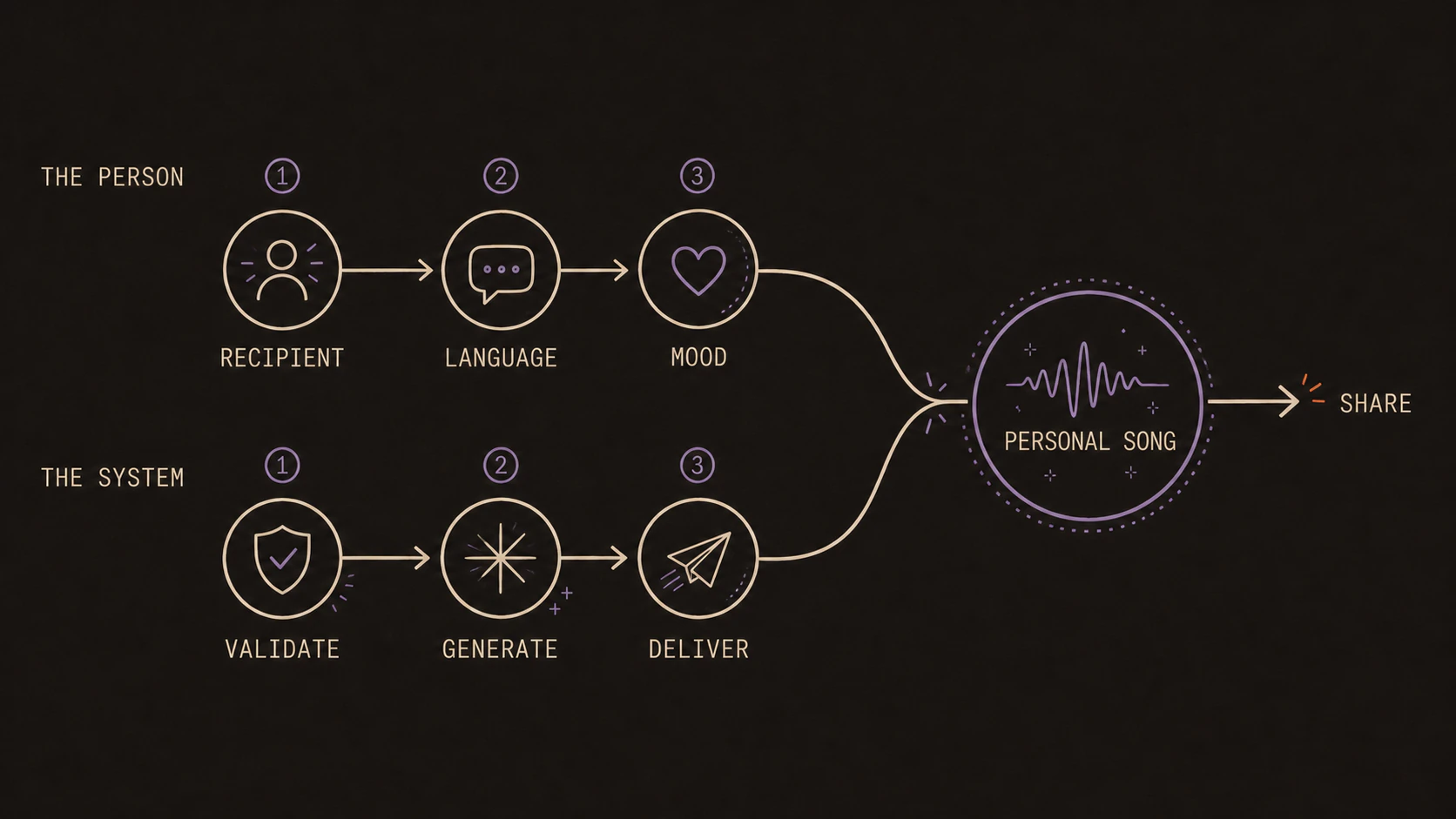
That separation mattered. The user needed enough freedom to make the result personal. The system needed enough structure to make the result reliable.
What shipped
- one connected journey from a physical product to a generated and shareable song
- language-specific generation routes tested with native speakers
- an automated live flow with no permanent human production step
- one software product operating across four public markets
A launch checklist for multilingual AI music
If you are building a similar product:
- start with the final artifact, its delivery channel and the user’s next action
- test written lyrics and sung pronunciation separately
- give every language its own test set and generation route
- use native speakers to find failures before launch
- define retries and fallbacks for weak or failed generations
- automate a language route only after it passes quality checks
- test registration, generation, delivery and sharing as one system
Model quality and product quality need separate tests. A strong song cannot compensate for a broken registration or delivery flow. A smooth interface cannot rescue consistently weak songs.
The model should be the least visible part
Milka feat.AI was publicly presented as an AI campaign, but its clearest idea was human: turn a product into a small personal gesture.
The model made the song possible. The product made the song usable.
That is still the standard I use when building AI-music products. The interesting question is not whether a model can generate a track. It is whether the surrounding software gives that track a reason to exist, a reliable path to the user and a clear next action.
Building an AI-music product or campaign? I help teams turn an initial concept into software that handles lyrics, generation, languages, delivery and launch.
Public sources
- Urban Media’s public 2024 credentials deck documents the campaign mechanics, four markets and public dates
- TengriNews describes the purchase, registration, song and prize flow
- Almaty Today documents the public campaign and personalized-track proposition
- SXODIM shows the public headphone-shaped installations in Almaty
The three illustrations in this article are original editorial visuals created for this case study. They do not reproduce the campaign interface, client artwork or third-party photography.