Making songs became fast. Choosing what to release, getting it to listeners, and learning from the results created the value.
We have released more than 80 tracks. By August 2026, the catalog had crossed 20 million streams and earned tens of thousands of dollars.
We own the rights to the catalog. Depending on how future income is valued, its potential value could be as high as $500,000. This is an estimate, not revenue, profit, or a sale price.
The prompt was the easy part. The work began after the songs were generated: choosing the best ones, building clear artist identities, preparing releases, getting them onto streaming services, following the money, and deciding what to make next.
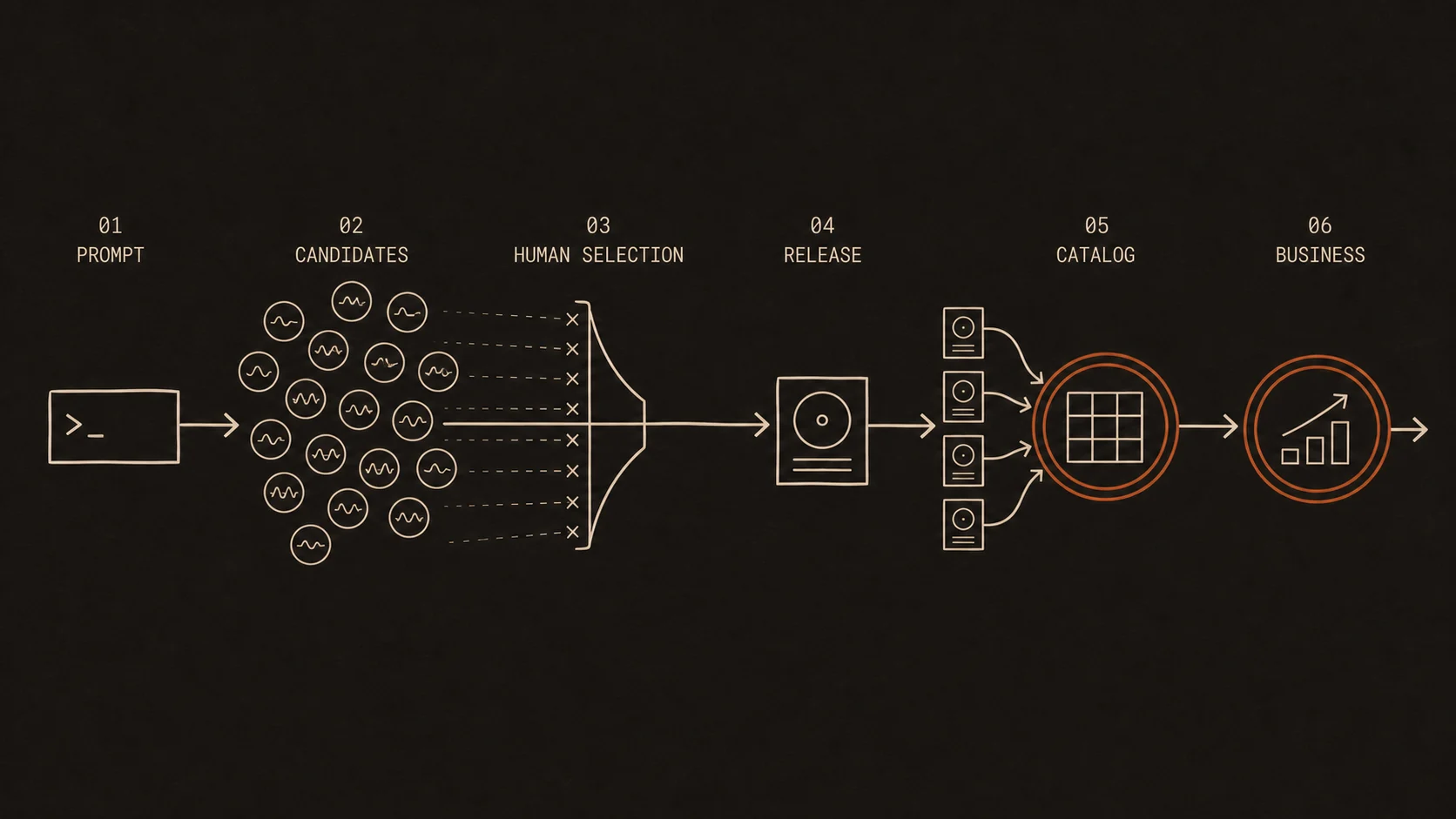
The hard part was choosing what to release
AI tools let us try more ideas in less time. They also gave us more music to review.
A song can sound finished and still not be worth releasing. The hook may be weak. The song may not fit the artist. It may sound too close to something already in the catalog.
Before releasing a track, we ask:
- Will a listener remember the hook?
- Does the song fit a clear artist identity?
- Is it different enough from our previous releases?
- Can we explain why this track belongs in the catalog?
In our catalog, a small group of tracks earned most of the money. Many other tracks earned much less. More tracks did not automatically mean more value.
A finished song still needs to reach listeners
A finished audio file is only the start of a release.
It still needs a final master, cover art, an artist name, credits, ownership details, a distributor, and a release date. All of that information must be correct on every streaming service.
Small errors can create large problems. Wrong information can send a song to the wrong artist page. A rights question can delay a release. A missing credit can require corrections across several services.
A song can be listed differently by the distributor, the streaming service, and the royalty report. If the information does not match, it becomes difficult to trace the money.
Our most expensive mistakes were usually not in the music. They happened between the distributor, streaming service, artist page, royalty report, and payment account.
Someone still needs to follow every release from the final audio file to the final payment.
More songs do not automatically make a catalog
A catalog works when its releases support each other.
A listener who finds one song needs a reason to play another. That reason may be a consistent sound, a clear emotional use, a recognizable artist, or a playlist that leads to older songs.
Releasing music in many popular genres can create many weak beginnings. It does not automatically create a strong catalog.
Releasing too many songs close together also made it harder for us to learn. Streams, saves, playlist activity, and follower numbers could all move at the same time. We could not always tell which song caused the change.
More releases sometimes gave us less useful feedback.
We started keeping a simple record for each release:
- what we expected before release;
- where listeners found the song;
- whether they saved it or played another song;
- whether the release increased listening to older music;
- what we should change before the next release.
Without this record, a team can repeat the same mistake while believing that it is learning.
Streams do not tell you how much you earned
Twenty million streams show that people listened. But the stream count alone does not tell us how much the catalog earned.
Spotify produced the largest share of our streaming revenue. Apple and YouTube were also important. Many other services added smaller amounts.
Each service pays differently. The amount can also change with the listener’s country, subscription type, and reporting month. Money from a stream may appear in a royalty report months later.
Two songs with similar stream counts can therefore earn different amounts.
This is why we stopped trusting calculators that use one fixed payment rate. I explain the differences in a separate streaming calculator and article.
To understand what a song earned, we have to connect the release with the streaming reports, the distributor’s royalty report, and the payment that reached the account.
If those records do not match, streams can grow while the team still does not know what the catalog earns.
Five things we had to get right
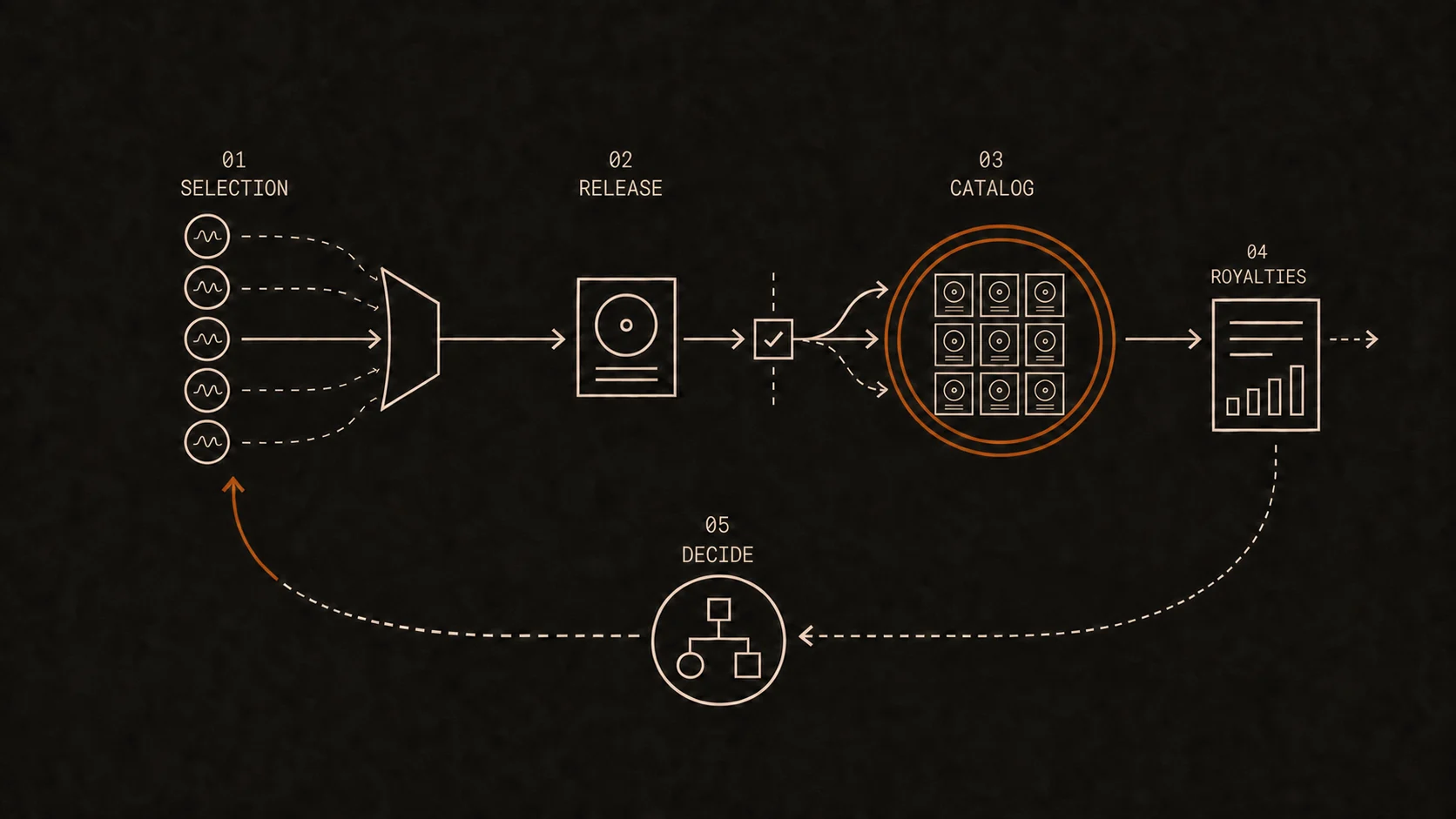
- Choosing songs: release only the tracks that fit the artist and meet a clear standard.
- Releasing them: prepare the audio, rights, credits, cover art, distributor information, and final checks.
- Connecting the catalog: give listeners a clear artist and an easy path to older music.
- Following the money: match streaming activity, royalty reports, fees, and payments.
- Making the next decision: continue, change, expand, pause, or stop based on the results.
What works for one artist may not work for another. Releasing more often can help one catalog and bury another.
Five questions before releasing more music
- Who decides whether a song is good enough to release?
- Can you follow each song from its credits and ownership details to the distributor, streaming services, royalty report, and payment?
- Which songs bring back listeners and earn most of the money?
- Do new releases lead listeners to older songs?
- What did the last release change about the next one?
If you cannot answer these questions, releasing more music will create more confusion.
A prompt can create a song. A catalog becomes a business when the team can choose what to release, get it to listeners, follow the money, and learn what to do next.